
Embryo Attrition
What you NEED to know

Hi Friend,
The journey of IVF is one filled with hope, anticipation, and a desire for that ultimate goal—a healthy baby. When you start the process, it’s natural to focus on the outcome and envision success, but there are aspects of IVF that often aren’t discussed in-depth during the initial consultations. One of the most significant—and least talked about—parts of this process is embryo attrition.
Embryo attrition refers to the gradual decrease in the number of eggs, fertilized embryos, and ultimately, viable embryos throughout the IVF process. It’s something that many couples are unprepared for, and it can make the emotional rollercoaster of IVF feel even more daunting. Today, I want to shine a light on this process, because understanding what happens at each stage can help you better manage your expectations and stay hopeful even when the numbers seem to shrink.
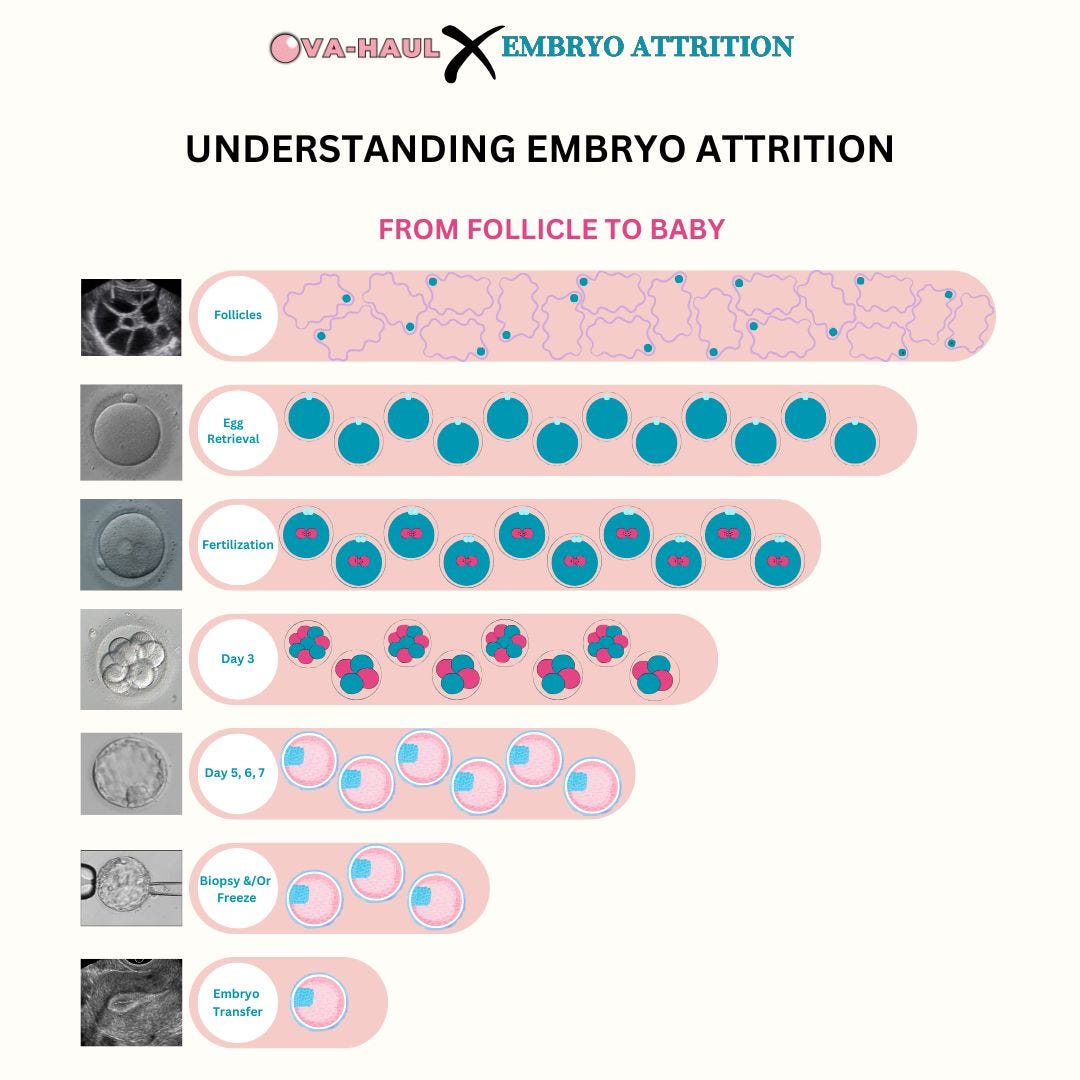
What Is Embryo Attrition?
Let’s start with the basics. Embryo attrition describes the inevitable decline in numbers that happens throughout each phase of IVF:
• Egg Retrieval: While your fertility specialist may retrieve several follicles, not all of these will contain mature eggs. Sometimes, only a portion of the eggs retrieved are viable and ready for fertilization.
• Fertilization: During this step, the mature eggs are mixed with sperm, but not all of them will fertilize successfully. Depending on the quality of the eggs and sperm, you may see a significant drop in numbers here.
• Embryo Development: As the fertilized eggs begin to grow, some will develop into embryos and then blastocysts. But unfortunately, not all will make it to this stage. Some embryos may arrest in development, meaning they stop growing.
• Genetic Testing (if applicable): If you opt for preimplantation genetic testing (PGT), some embryos may be deemed genetically abnormal and unsuitable for transfer, further decreasing the total number of viable embryos.
• Embryo Transfer: Even after a successful transfer, not all embryos will implant in the uterine lining. Implantation is a complex process, and sometimes, despite everything being done right, the embryo won’t take hold.
This process is like a funnel: you start with a wider pool of possibilities (the number of eggs retrieved) and that pool narrows with each subsequent step, until hopefully, you have a viable embryo to transfer and carry to term.
Why Is Embryo Attrition Not Discussed Enough?
Embryo attrition is a natural and expected part of IVF, yet it’s something that isn’t discussed as often or as in depth as it should be. When talking with women who have been through the process, they all mention how their clinic tends to focus on the success stories—understandably, because there’s so much hope tied to those outcomes—but it leaves many feeling unprepared when their numbers start to drop.
At every stage, patients may feel blindsided as the numbers dwindle. You may start with ten or more eggs, and by the time you reach the transfer stage, you may only have one or two embryos suitable for implantation. This can create a sense of loss, as if your chances are slipping away. But in reality, attrition is a normal part of the process and something that happens to almost everyone undergoing IVF.
Understanding this can help ease the emotional burden. Instead of seeing it as a failure, you can recognize that the process is designed to filter for the best possible outcome: the strongest, healthiest embryo that has the best chance of becoming a baby.
Expectations Through IVF
As you prepare for IVF, it’s important to set realistic expectations.
Here are a few tips for managing expectations throughout the IVF process:
• Ask Questions: Don’t hesitate to ask your fertility specialist about embryo attrition and how it may affect your treatment. Knowing what to expect ahead of time can help you cope better when the numbers start to drop.
• Stay Informed: The more you know about the IVF process, the better prepared you’ll be emotionally. Understanding that attrition is normal helps you see the bigger picture.
• Lean on Support: IVF can be an emotional journey. It’s important to have a strong support system, whether it’s your partner, family, friends, or even a fertility coach. Sharing your feelings and concerns with others can help you manage the emotional toll.
Finding Hope Despite Attrition
While embryo attrition can feel discouraging, remember that IVF success isn’t about quantity—it’s about quality. Even if you’re left with only one or two viable embryos, those embryos may have a strong chance of becoming your baby. There are countless stories of women who conceived with just one healthy embryo after experiencing high attrition rates.
It’s easy to get caught up in the numbers, but the real success lies in the strength and health of the remaining embryos. It only takes one viable embryo to achieve your dream of becoming a parent.
Preparing for the Emotional Journey of IVF
Going through IVF can be challenging on both a physical and emotional level. While it’s crucial to stay hopeful, it’s equally important to take care of yourself during this process. Here are a few ways to nurture your emotional well-being:
• Stay Informed: Knowledge is power. By understanding the process of embryo attrition, you’ll be better equipped to handle any setbacks.
• Build a Support Network: Surround yourself with supportive people who understand what you’re going through, whether they’re friends, family, or a fertility community.
• Self-Care Is Key: Prioritize self-care throughout the process. This might include anything from yoga and meditation to seeking out professional counseling if the emotional toll becomes overwhelming.
The IVF Funnel: A Path to Hope
At the end of the day, the IVF process, while challenging, is about finding that one embryo that will become your baby. While it’s natural to feel discouraged as the numbers decrease, focusing on the ultimate goal—a healthy, viable embryo—can help you stay positive.
If you have any questions about IVF and embryo attrition, or if you’re interested in preparing your body for IVF or pregnancy, I’m here to help. Whether you need support understanding the IVF process or want to optimize your health for a successful outcome, feel free to reach out.
Let’s work together to create a plan that supports your goals.
With Love & Reproductive Health,
Lindsay
Founder of OVA-Haul
[Fertility Coach | Embryologist]
Reach out if you have any questions about IVF, embryo attrition, or preparing your body for a healthy pregnancy! Let’s chat about how I can support you through this journey.